

Most job seekers treat a cover letter as an afterthought, something to rush through or skip entirely. That's a costly mistake. Cover letters still matter and are often the deciding factor in later hiring stages, particularly for senior roles. Far from being obsolete, a well-crafted cover letter can separate you from a pool of equally qualified candidates. This guide walks you through what a cover letter actually is, how to structure one, which type fits your situation, and the practical steps that turn a blank page into a compelling case for hiring you.
Table of Contents
- What is a cover letter and why does it matter?
- The anatomy of an effective cover letter
- Common cover letter types and when to use them
- crafting a standout cover letter: practical steps and expert insights
- A fresh perspective: what most guides miss about cover letters
- Create your winning cover letter today
- frequently asked questions
Key Takeaways
| Point | Details |
|---|---|
| Purpose of a cover letter | A cover letter introduces you, explains your unique fit, and adds personality beyond your resume. |
| Essential structure | The best cover letters are concise, tailored, and use a clear structure including header, hook, achievements, and closing. |
| Types and strategies | Choose the right type and adapt your approach for career changes, gaps, or referrals to maximize your impact. |
| Quality over quantity | Never send a generic or weak cover letter—focus on adding value and personalizing your application. |
What is a cover letter and why does it matter?
A cover letter is a one-page document submitted alongside your resume to introduce yourself, highlight relevant skills, express enthusiasm for the role, and explain why you're the right fit. Think of it as the handshake before the interview. Your resume lists what you've done. Your cover letter explains why that matters for this specific job.
The biggest misconception floating around is that cover letters are dead. They're not. What's dead is the generic, copy-paste version that starts with "I am writing to express my interest..." That kind of letter hurts more than it helps. A thoughtful, tailored letter still carries real weight, especially once a recruiter moves beyond the initial resume screen.
"Cover letters are most powerful as a differentiator in later hiring stages, particularly for senior positions where fit and communication skills become critical factors."
Here's where cover letters make the biggest difference:
- Senior and leadership roles, where cultural fit and strategic thinking matter as much as credentials
- Career changes, where you need to connect dots your resume can't draw on its own
- Small companies and startups, where hiring managers read every word and personality is a real filter
- When you were referred, because the letter adds context to a warm introduction
- When the posting specifically requests one, since skipping it signals poor attention to detail
A strong cover letter does several things at once. It shows you've researched the company. It frames your experience as a solution to their specific problem. And it gives the hiring manager a glimpse of how you think and communicate. You can learn more about the impact of cover letters on your application success and how to use them strategically.
The anatomy of an effective cover letter
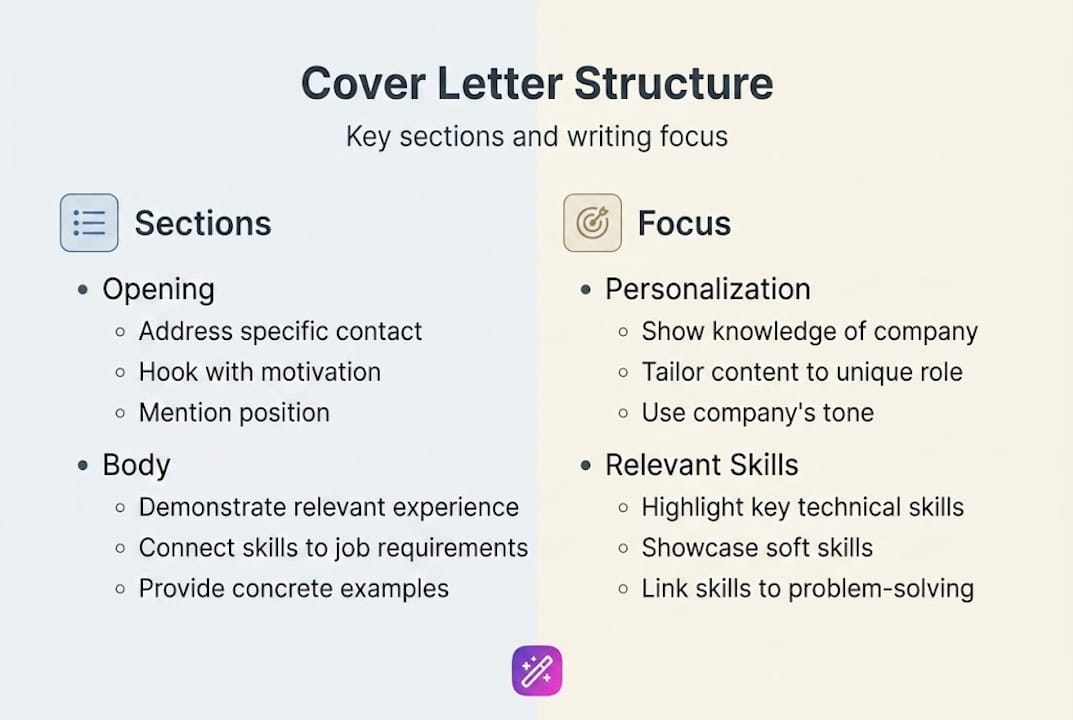
Knowing what to include is one thing. Understanding how each part works is what separates forgettable letters from callbacks. A strong cover letter structure follows a clear sequence: header, personalized greeting, opening hook, body paragraphs with quantified achievements, and a closing call to action.
Here's how each part should work:
- Header: Include your name, phone number, email, LinkedIn URL, and the date. Match the formatting to your resume for a polished, cohesive look.
- Personal greeting: Address the hiring manager by name whenever possible. "Dear Ms. Rodriguez" beats "Dear hiring manager" every time.
- Opening hook: Lead with something specific. Name the role, mention a recent company initiative you admire, or open with a result you achieved that's directly relevant.
- Body paragraphs: Use one or two paragraphs to connect your experience to the job's needs. Apply the PAR framework: describe a Problem you faced, the Action you took, and the Result you delivered. Numbers make this concrete.
- Strong close: State your enthusiasm clearly, request an interview, and thank them for their time without being overly formal.
| Cover letter part | Strong version | weak version |
|---|---|---|
| Opening | "After growing our team's revenue by 40%, I'm excited to bring that same approach to [Company]." | "I am writing to apply for this position." is weak. Use a result or insight instead. "I'm applying for the job" wastes your opening line. Begin with impact instead. Use a specific achievement or genuine insight. Lead with energy and relevance to grab the reader's attention immediately. Don't wait until the second paragraph to say something compelling. Your first sentence is premium real estate. Use it wisely. |
| Skills section | "I led a cross-functional team that reduced onboarding time by 30%." | "I am a team player with strong communication skills." |
| Close | "I'd love to discuss how my background fits your goals. Can we schedule a call this week?" | "Thank you for your consideration. I hope to hear from you." |
Pro tip: Before you send, run your letter through a basic keyword check. Pull the top skills and phrases from the job posting and make sure your letter reflects them naturally. This helps with both ATS filters and human readers who scan for relevance fast. You can find tips for tailoring your cover letter to specific postings to avoid the most common formatting and keyword mistakes.
Common cover letter types and when to use them
Not every cover letter serves the same purpose. Using the wrong type for your situation is like wearing a suit to a beach interview. It's technically effort, but it misses the mark. Understanding the types of cover letters gives you a strategic advantage from the very first line.
| Cover letter type | Primary purpose | Best used when** |
|---|---|---|
| Application letter | Apply for a posted opening | You're responding to a specific job listing |
| referral letter | leverage a personal connection | Someone inside the company referred you |
| prospecting letter | Express interest before an opening exists | You want to get on a company's radar proactively |
Beyond these three, there are situations that require a different approach entirely. Career changers, people with employment gaps, and recent graduates all face unique challenges that a standard letter won't address. According to HBS career research, the most effective strategy in these cases involves leading with transferable skills and framing your story as an asset, not an apology.
Here's how to handle the trickiest situations:
- Career change: Lead with the skills that transfer directly. If you managed budgets as a teacher and you're moving into operations, that's not unrelated experience. It's proof of fiscal discipline.
- Employment gap: Address it briefly and positively. Did you freelance, care for a family member, or take a course? State it plainly. Then pivot to what you're ready to bring now.
- No experience: Focus on academic projects, volunteer work, or transferable skills. Show initiative and curiosity rather than apologizing for your starting point.
- Internal transfers: Write as someone who knows the culture. Reference shared goals and internal context that an outside hire couldn't offer.
Pro tip: When making a career change, don't list every job you've ever had. Pick the two or three experiences that speak most directly to the role and build your narrative around those. You can review cover letter examples across industries to see how others have framed pivots successfully.
crafting a standout cover letter: practical steps and expert insights
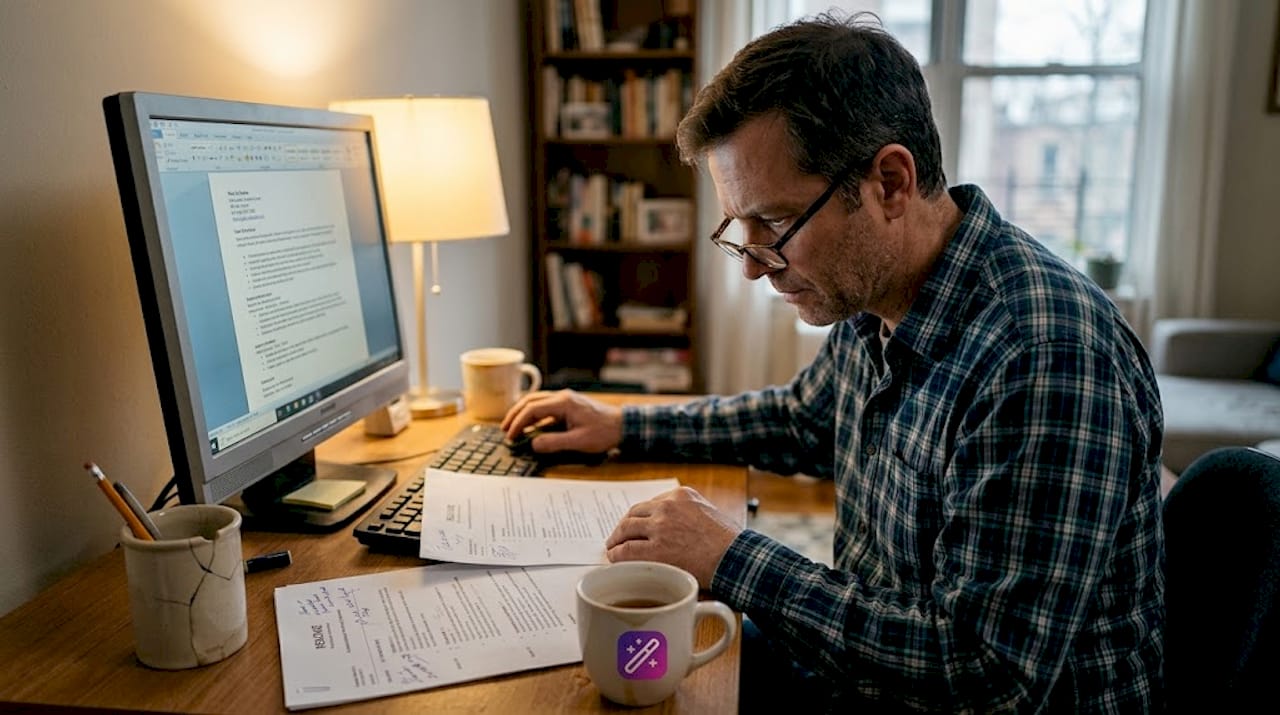
Writing a cover letter doesn't have to be painful. With the right process, it becomes a focused exercise in connecting your story to a company's needs. Here's a step-by-step approach that consistently produces stronger results.
- Research the company first: Read recent news, check their LinkedIn, and understand their current priorities. One specific reference in your letter shows you did the work.
- Match your opening to the role: Don't start with your name or job title. Start with enthusiasm and a concrete result that's relevant to what they need.
- Tell a narrative, not a list: Your body paragraphs should read like a mini-story, not bullet points in prose form. Connect your past to their future.
- quantify wherever you can: "I managed a team" is vague. "I managed a team of eight that delivered projects 20% under budget" is a reason to call you.
- Review and cut: A tight, focused letter signals good judgment. If a sentence doesn't earn its place, cut it.
Experts from Harvard Business Review advise that you should open with specific enthusiasm, tell a compelling narrative, and prioritize quality over volume. A tailored letter you spent an hour on beats five generic ones every time.
"A cover letter is your chance to make the case for yourself as a human being, not just a list of qualifications."
One insight most guides skip: know when not to submit a cover letter. If the posting says it's optional and you can't write a genuinely tailored one, skip it. A weak letter actively damages your candidacy. For expert cover letter tips on making every word count, the goal is always quality over quantity.
A fresh perspective: what most guides miss about cover letters
Here's what we've learned from watching thousands of job seekers approach this process: the cover letter isn't a formality. It's the one place in your application where your personality, judgment, and communication style are fully visible. And most people waste it.
Many applicants misuse cover letters by either restating their resume line by line or submitting a generic template without a single tailored detail. Both approaches signal low effort, which is the opposite of what you want a hiring manager to think.
The uncomfortable truth is that a cover letter is a writing test. It tells the hiring manager how you think, how you communicate, and whether you can make a clear argument. These are skills that matter in almost every professional role. Cover letters aren't dying. Bad ones are just very visible. When you write one that's specific, honest, and direct, it stands out because most of your competition didn't bother. Start making your cover letter stand out by treating it as an opportunity rather than an obligation.
Create your winning cover letter today
You now have a solid foundation: you know what a cover letter is, how to structure it, which type fits your situation, and how to write one that actually gets read. The next step is putting that knowledge into action.
EasyCV.ai makes it simple to go from blank page to polished, tailored cover letter in minutes. The platform's AI-powered tools help you align your language with the job description, optimize for ATS filters, and present your experience in the most compelling way possible. Whether you're applying for your first role or making a senior-level move, the Easy CV builder gives you everything you need to create a letter that opens doors. Try it today and take the guesswork out of your next application.
frequently asked questions
How long should a cover letter be in 2026?
A cover letter should be one page or about 250 to 400 words and three to four focused paragraphs. Keep it tight and relevant rather than exhaustive.
Should I always include a cover letter with my job application?
Only include one when you can write something genuinely tailored. Quality over always submitting is the right approach, because a weak or generic letter can hurt your candidacy more than no letter at all.
What's the difference between a cover letter and a resume?
Your resume lists qualifications and experience, while a cover letter highlights relevant skills and explains why you're the right fit with personality and narrative that a resume simply can't convey.
How do I address gaps in employment in my cover letter?
Briefly explain gaps positively, focusing on what you learned, accomplished, or built during that time, and then pivot quickly to what you're ready to contribute now.
Are cover letters read by employers in 2026?
Yes, particularly for senior roles where 91% are read, career changes where they increase interview chances by 3.2 times, and as tiebreakers between equally qualified finalists.